
Throughout United States history, immigrants from Asia and Pacific Islands have made significant contributions to the country, while also facing systemic and interpersonal discrimination. In particular, Asian women experience fetishization, while Asian men experience emasculation or are perceived as asexual, making conversations surrounding gender identity and sexual orientation particularly fraught within the community.
To challenge these stereotypes and respect the diversity of the Asian American, Native Hawaiian, and Pacific Islander community, we are uplifting the queer stories of AANHPI individuals to bring awareness to the intersectionality of race, gender identity, and sexual orientation today and throughout history.
During the first part of the month, we celebrate LGBTQIA+ Asian icons Dr. Margaret Chung, James Willis Toy, and Kim Coco Iwamoto.
Dr. Margaret “Mom” Chung (1889 – 1959)
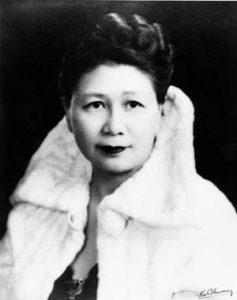 Dr. Margaret Chung was the first American-born Chinese women to become a physician in the United States. At the time, both women and non-white people were seldom welcomed into medicine, making Dr. Chung’s story one of breaking through multiple glass ceilings.
Margaret was the oldest of eleven children, born to Chinese immigrants who had both arrived in the United States as young children. The Chungs were devout Christians, attending church twice on Sundays and praying daily. As the eldest, she helped raised her younger siblings and care for her mother, who died slowly from tuberculosis.
In 1905, sixteen-year-old Margaret was interviewed by the Los Angeles Herald, talking about her love of learning and interest in strengthening connections between the United States and China. Though she wanted to be a reporter at the time, her goals shifted towards becoming a medical missionary to China.
Margaret enrolled at the University of Southern California to pursue medicine, made possible by earning a scholarship through the Los Angeles Times. Women made up no more than 5% of medical school enrollment at the turn of the century. During that time, she wore masculine clothing and referred to herself as “Mike.”
Upon graduation, Margaret applied to become a medical missionary, but was rejected because of her Chinese heritage. With her dreams of going abroad squashed, she completed her medical residency at the State Hospital for the Insane in Kankakee, Illinois. A prominent criminologist recognized her expertise and compassion in working with people with mental illnesses and, together, they established Chicago’s first psychopathic institute for youth. She was on her way to rising in the field of criminal psychology, but quickly became disinterested by the challenging position of determining people’s sanity and criminal sentencing.
Margaret returned to California shortly after her father passed unexpectedly, leaving her to raise her six youngest siblings. She became a surgeon at a hospital in Los Angeles, helping people who had been in industrial accidents. This experience gave her expertise in plastic surgery, which also grew her private practice of celebrities, including Mary Pickford.
Once again, Margaret felt unfulfilled. In 1922, Margaret moved to San Francisco to open a practice in Chinatown, intent on supporting Chinese women. “There is so much to be done for women—in a medical way—so much that they need,” Margaret said, albeit eight years earlier. “Do you know that there are many women—especially women of my race—who do themselves harm because they will not consult a man doctor?”
However, the community was skeptical of Western medicine and further put off by the idea of a single woman practicing medicine and wearing men’s clothing. Instead, she found that non-Chinese patients were interested in her care because of a growing interest in alternative medicine from East Asia. Over time, however, her patients diversified, including Chinese women. She went on the establish the first Western Hospital in Chinatown, leading the perinatal unit.
Margaret was sapphic, known to have relationships with poet and journalist Elsa Gidlow and vaudeville performer Sophie Tucker. However, she was careful to keep her identity a secret, travelling to queer neighborhoods outside of Chinatown to prevent rumors. Most of our understanding of her sapphic identity comes from people writing about her or their relationships with her.
In 1937, the Japanese invaded China, beginning the Sino-Japanese War. Sympathy for China grew across the United States. Though Margaret was applied to be a surgeon abroad, the U.S. military requested she aid in secretly recruiting American pilots who would become known as the “Flying Tigers.” Over time, the recruits began to call her “Mom” and them her “adopted sons.” She would send her “sons” (of all genders) letters and gifts, often a jade Buddha, while they served abroad. She had a network of over 1,000 sons by the end of her life and continued to host dinners for them for years following the war.
During World War II, Margaret continued to support recruiting and was well-known with military officials. She used her connections to advocates for the creation of WAVES (Women Accepted for Volunteer Emergency Service), a reserve corps for women in the Navy, in 1942. However, she received little credit for her leadership and was, in fact, rejected from the corps due to her race and suspected sexual orientation.
Throughout her life, she was an advocate for the community, through formal speaking engagements and educating the local Chinese community about their health. She was the first American woman to receive the People’s Award of China and received a citation from the Red Cross for “meritorious personal service performed in behalf of the nation.”
Dr. Margaret Chung died on January 5, 1959. A significant number of letters with her “sons,” celebrities, and war memorabilia is housed at The Ethnic Studies Library at University of California, Berkeley.
Sources
Alexandra, Rae. “The Chinese-American Doctor Who Raised Hell—and 1,500 WW2 Servicemen | KQED.” KQED, August 27, 2021. https://www.kqed.org/arts/13897608/the-chinese-american-doctor-who-raised-hell-and-1500-ww2-servicemen.
Amin, Aisha. The First American-Born Chinese Woman Doctor. 2020. 10:18. https://www.pbs.org/wnet/americanmasters/first-american-born-chinese-woman-doctor-ysk233/14464/.
Los Angeles Herald. “Chinese Girl Here Studying Medicine.” October 14, 1914. 2nd ed. https://cdnc.ucr.edu/?a=d&d=LAH19141014-02.2.296.
Los Angeles Herald. “Chinese Girl to Become Reporter.” October 10, 1905. https://cdnc.ucr.edu/?a=d&d=LAH19051010.2.121.
Otani, Janice. “Guide to the Margaret Chung Papers, 1880-1958 (Bulk 1942-1944).” Online Archive of California, The Regents of the University of California, September 2000. https://oac.cdlib.org/static_findaids/ark:/13030/kt3f59n6hk.html.
Wagner, Ella. “Dr. Margaret ‘Mom’ Chung (U.S. National Park Service).” Accessed March 17, 2026. https://www.nps.gov/people/dr-margaret-mom-chung.htm.
Photo Credit: Margaret Chung, Unknown.
James Willis Toy (1930-2022)
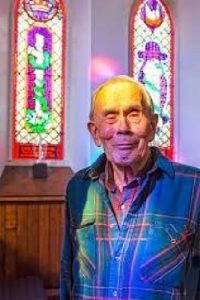 James Willis “Jim” Toy accomplished quite a feat being the first person to publicly come out in the State of Michigan.
While a robust dive into the archives might prove otherwise and certainly queer people live in Michigan before Jim, his 1970 speech at an anti-war rally is thought to be the first pubic coming out in the state.
James Willis was a second-generation Chinese American, who experienced anti-Asian discrimination throughout his adolescence in the wake of World War II. In fact, he would wear a placard around his neck that said “Not Japanese” in an attempt to prevent bullying. He also began to recognize that he might be queer. “Growing up in a time when sexual orientation was not discussed, he shared, “I felt confusion, isolation, shame, despair. I didn’t know that I was anything but a suicidally unhappy heterosexual person.”
While he is most well-known for his activism, Jim was also a talented musician, studying musicology at the graduate level, as well as singing and playing violin throughout his life. After graduating from Denison University, he worked at a blood bank, part of his assignment as a conscientious objector to the Korean War. During this time, he met an older gay man who introduced him to queer life and helped him understand that his feelings of confusion and unhappiness were connected to his identity.
In 1957, he became the Director of Music for St. Joseph’s Episcopal Church in Detroit, which connected him to the civil rights movement. A year later, Jim married Janet Barnes, a women he met through the church choir. At the time, he was did not fully recognize his sexual orientation. However, he was unhappy and they divorced amicably in 1963. A few years later, the progressive church publicized a “gay meeting.” Jim debated attending, still not confident in his identity. However, he went and immediately felt at ease. Just a few months later, at a 1970 anti-war rally, he publicly came out as gay.
Understanding the importance of advocacy, Jim co-founded the Detroit and Ann Arbor Gay Liberation Fronts as the national LGBTQ+ rights movement picked up momentum. He also authored Ann Arbor’s ordinance to prohibit discrimination based on sexual orientation and the city’s first pride week proclamation in 1972. He would continue to champion inclusion for his transgender neighbors for 27 years, when the city also added gender identity to its list of protections. Throughout this time, his mantra was “Keep misbehaving,” a reminder to keep advocating for justice.
Jim was instrumental in moving the University of Michigan system to the forefront of queer inclusion for young people. He co-founded the first university LGBTQ+ center in the country in 1971, which he led until 1994 and lives on as the “Spectrum Center.” The center ensured queer students were not discriminated against academically, provided speaker’s training for students to humanize their experience, hosted community events, and ran a 24-hour mental health crisis line. After decades of Jim’s advocacy, University of Michigan added sexual orientation and gender identity and expression to its non-discrimination protections. The University bestowed an honorary Doctorate of Humane Letters in 2021. However, at the time, his advocacy was not acclaimed. Librarian Anna Schnitzer reflected, “It was awful. He was mocked and scorned. I thought he was very brave.”
His commitment to community endured for decades and was recognized across Michigan for his contributions to the LGBTQIA+ community for over forty years. Jim continued to found and support organizations that responded to the needs of queer people, including transgender people, youth, inter-faith coalitions, and support for people living with HIV, especially during the height of the AIDS Crisis. After earning his Masters of Social Work in 1981, he offered pro bono services to help people come out and combat stigma. Notably, as gay and lesbian individuals achieved rights and social inclusion, he recognized that transgender people were not. His late organizing always used the acronym “TBLG,” putting “transgender” first in order of importance.
Jim passed away at the age of 91, and his papers are archived at the Bentley Historical Library, University of Michigan.
Sources
Retzloff, Tim. “‘Gentlest But Most Unshakeable Campaigner’ Jim Toy, Michigan LGBTQ+ Trailblazer and Icon, Dies at 91.” Between the Line, January 13, 2022.
Schlain. “Climbing the Mountain Together.” Human Resources University of Michigan, September 3, 2013. https://hr.umich.edu/climbing-mountain-together.
Sumerton, Amy. “James Willis (‘Jim’) Toy Obituary.” Ann Arbor Observer, April 25, 2022. https://annarborobserver.com/james-willis-jim-toy/.
University of Michigan. “James W. Toy Papers, 1915-2022.” Accessed March 16, 2026. https://findingaids.lib.umich.edu/catalog/umich-bhl-9744.
Photo Credit: James Toy, Unknown.
Kim Coco Iwamoto (born 1968)
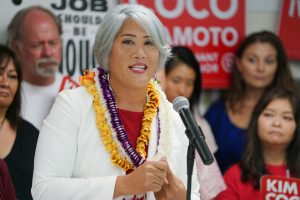 Kim Coco Iwamoto is Yonsei, a fourth generation American of Japanese Ancestry, who made history as the first transgender person elected to the Hawai’i state legislature in 2024.
Kim Coco grew up in a supportive family who were committed to community. Her father was the second-generation owner of a sizeable taxi company on O’ahu, Hawai’i. Her mother’s family were also business owners However, as they lived in California, they were force into internment camps during World War II. Nonetheless, her uncles joined the U.S. military after being released. Kim Coco recalls volunteering with the Red Cross and at the Kapiʻolani Women & Children’s Hospital as a child alongside her mother.
Throughout her youth, Kim Coco was “not shy,” she explained. “I was super flamboyant and put myself out there.” She recounted a time that a chaperone told her to “tone it down” at a high school dance. Rather than being offended, Kim Coco wrote a letter to the chaperone, principal, and multiple school administrators about how she would not change who she was and threatened to step down as class president. By the end of the day, she received a full apology. “I was a total diva by the age of 14,” she reflected with a laugh.
In her community, being transgender or queer in anyway was not something to be ashamed of. She saw transgender adults living full, authentic lives, including as employees and managers of her father’s company. In fact, Kim Coco, which is her birth name, feels she never truly transitioned. “This was always me,” she shares. “That’s why when people ask, “When did you transition?” I’m like, “’You know what? I don’t actually see my life like that. I feel like I’ve always been me.’ Who I am has always been different.”
Pursuing college on the mainland exposed Kim Coco to new realities of being openly queer+. As a young adult, Kim Coco was a creative, pursing degrees in merchandising and creative writing. However, despite graduating from the Fashion Institute of Technology, her his employer started denying her benefits because she was transgender. She sought legal advice, but learned that there were no protections for her at the time. She also began volunteering with a youth leadership program at a community center. Here, she meant a lot of queer youth who had been disowned by their family because of their identities. This experience revealed her to the systemic issues queer people, particularly youth, encounter and the importance of advocacy.
Kim Coco passed the bar in 2001 and returned to her home state of Hawai’i, ensuring that queer youth with similar backgrounds had access to resources and support. She worked at Volunteer Legal Services, an organization that provides free legal aid to those in need, and became a licensed foster parent, taking in queer youth who did not have a safe, supportive place to live.
However, Kim Coco recognized the importance of systemic change, in addition to the one-on-one support. As she supported her foster children, she saw that the education system was not truly serving the needs of youth. In 2006, she was elected to the Hawai’i Board of Education, making her the highest serving transgender elected official at that time. She was re-elected and later appoint to the Hawaiʻi Civil Rights Commission. Her commitment to addressing bullying in schools led to being honored as a “Harvey Milk Champion of Change” by President Barack Obama in 2013.
Nine year later, in 2024, Kim Coco usurped the longstanding House Speaker Scott Saiki in the Democratic primary and was elected to the Hawai’i State Legislature. Her election comes during a time fraught with anti-transgender rhetoric. In fact, in her first legislative session, Republican colleagues attempted to discount her election.
Sources
Kim Coco Iwamoto. “Meet Kim Coco.” Accessed March 16, 2026. https://www.votekimcoco.com/meet-kim-coco.
Kuga, Mitchell. “Kim Coco Iwamoto: Unashamed Champion of Change.” Lei, January 7, 2020. https://leitravel.com/kim-coco-iwamoto-trans-champion-of-change/.
Lei Pua Ala Queer Histories of Hawai’i Project. “Kim Coco Iwamoto.” Accessed March 16, 2026. https://www.queerhistoriesofhawaii.org/kimcocoiwamoto.
Photo Credit: Kim Coco Iwamoto, Cory Lum/Civil Beat. 2018.

Why is AANHPI Heritage Month in May?
Asian American, Native Hawaiian, and Pacific Islander Heritage Month has been recognized in May across the United States since the 1970s, commemorating the arrival of first known Asian American immigrant from Japan, Nakahama Manjirō, on May 7, 1843 and the completion of the transcontinental railroad on May 10, 1896, a feat made possible by a considerable number of Chinese immigrants.
Why are these communities recognized together?
While the category “Asian American, Native Hawaiian, and Pacific Islander” (AANHPI) was established in the 1960s to cultivate political power, it is important to recognize that the community is not a monolith and an umbrella term not embraced by all. Asian, Native Hawaiian, and Pacific Island Americans represent people from a massive geographic region with diverse cultures and histories. This community includes 19 million Americans, 59% who are first-generation immigrants.
How does queerness and AANHPI identity intersect?
Throughout United States history, immigrants from Asia and Pacific Islands have made significant contributions to the country, while also facing systemic and interpersonal discrimination. In particular, Asian women experience fetishization, while Asian men experience emasculation or are perceived as asexual, making conversations surrounding gender identity and sexual orientation particularly fraught within the community.
A Note on Language
Our understanding of gender identity and sexual orientation has evolved over time. Some of the words we use today, like lesbian, transgender, or nonbinary, were not popular – or even existed – in certain periods of history.
I have elected to use the term “sapphic” to describe people who were perceived as women throughout the majority of their lives and had emotional and/or physical romantic relationships with other people who identified as women throughout a majority of their lives. This includes people who we may today understand as nonbinary or transmasculine, but identified or were perceived as women in their time.
Learn About Other Queer Icons
Worcester & HIV Care | Queer Worcester Icons 2026
In the early 1980s, patients, predominantly young gay men, began arriving in hospitals with a...
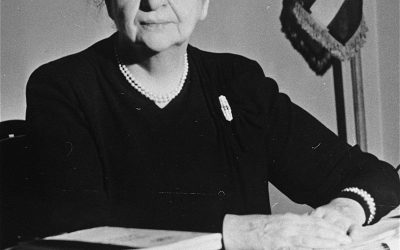
Frances Perkins | Queer Worcester Icons 2026
Originally published for Women’s History Month 2025 The workers’ rights we benefit from today are...
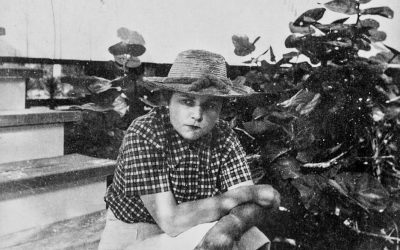
Elizabeth Bishop | Queer Worcester Icons 2026
While she avoided the public spotlight, Elizabeth Bishop’s lasting legacy places her among one of...