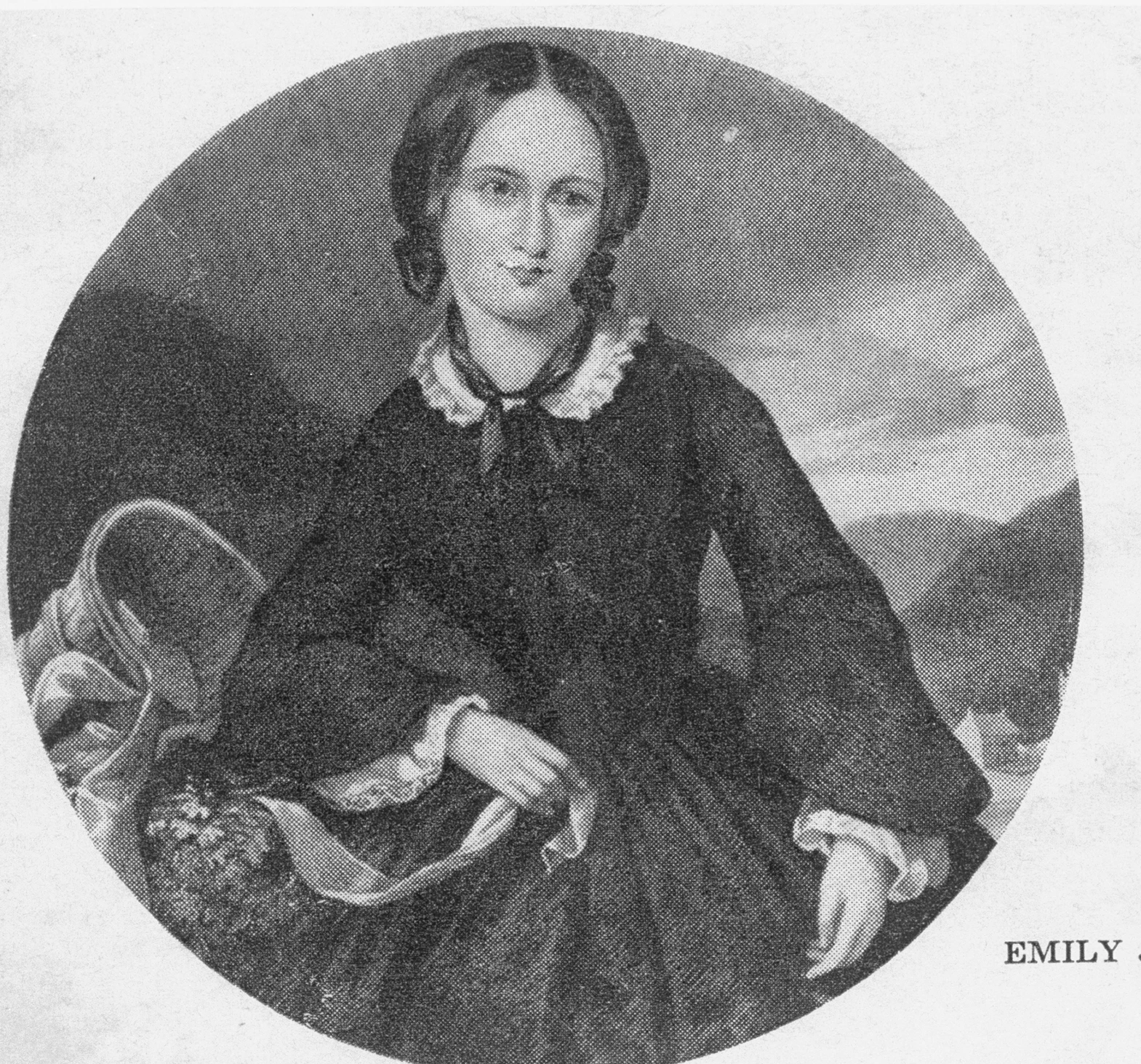
A portrait of Emily Brontë. (Photo by Time Life Pictures/Mansell/The LIFE Picture Collection/Getty Images)
Expectations of gender and sexuality have evolved over time and are influenced by cultural context.
People who do not conform to those expectations are often scrutinized by their contemporaries and, often, pathologized by historians.
Asexuality is an often misunderstood identity in today’s world and even more so in historical research.
Demystifying Asexuality
Asexual is an umbrella term people experience little to no sexual attraction. Asexual is different from abstinence or celibacy, which are voluntary experiences for people who do feel sexual attraction. People who identify as asexual have a myriad of relationships with sex, all of which are valid and to be respected. Because many societies prioritize family and childbearing, asexuality has been pathologized in medicine as a disorder, rather than a legitimate experience.
Sexologists have written about, studied, and validated the asexual experience since the 1890s. Magnus Hirschfeld, a pioneering researcher from Germany, published a pamphlet about people without sexual desire in 1896. The term “asexual” was likely first used by Reverend Carl Schlegel in 1907. Alfred Kinsey’s landmark study on sexual orientation even included “Category X” for those who reported no sexual interest, about 1.5% of the men who participated in the study.
As the field of psychology grew, people disinterested in or indifferent to sex were often diagnosed with “hypoactive sexual desire disorder.” This diagnosis often came when a partner was upset by their partner’s low libido, even if that individual was content. As a result, many asexual have been stigmatized or invalidated. While people’s sexual desire evolves over time, asexual people’s disinterest in sex is fairly consistent over their lifetime. In 2013, due to decades of advocacy and expanded research, the American Psychiatric Association updated its criteria for sexual dysfunction to focus on allosexual people who need support, de-pathologizing asexuality. However, asexual people continue to be misdiagnosed with sexual disfunction or invalidated by friends and family.
Spinsters and Bachelors
As explored in the initial “How We Tell Your Story” series, discovering queer history requires expansive research and nuance. It often requires looking at what is not there, just as much as what is. People assigned female at birth (AFAB) who did not marry were often categorized as spinsters, such as Emily Dickinson or Sarah Orne Jewett, as historians overlooked or refused to acknowledge evidence of sapphic relationships (See Note on Language). Other times, for people assigned female at birth, gender non-conformity is explained away as bucking the constraints of gender roles, rather than acknowledging the primary accounts of feeling and living as another gender, as in the case of Louisa May Alcott. Analyzing AFAB people who never married requires unpacking spinster as both a political identity and stereotyped assumption, as well as employing a queer, asexual-inclusive, lens.
Emily Brontë is one of the many great literary spinsters of the 1800s. Emily’s sister Charlotte explained in her biography, “Emily had little idea of love as a passion generally understood. She was a girl who, while appreciating deep affection, seemed incapable of that sentiment being directed towards a man in the way society expected.”
Very few of Emily’s letters or journals survive. As a result, myths have been accepted as fact in the 175 years since her death at the age of 30. Biographers have constructed a portrait of her based on her sister Charlotte’s posthumous reflections, which may be biased after Emily passed away so young, as well as her poems and Wuthering Heights. While Emily’s creative works may give a glimpse into her identity, they are works of fiction and may not be an direct reflection.
Muriel Spark’s 1953 essay offers a thoughtful, though not definitive, assessment of her identity. “Although her work is constantly concerned with the subject of love, she had no realistic conception of it,” Spark writes. “We get no clue from her work that she ever experienced a love affair, far less that she ever entertained amorous feelings for a living person; love is a conceptual though passionate emotion in Emily Bronte’s work.”
Spark, among other Bronte scholars, point to Emily’s personal and creative writing as markedly different to other spinsters of the era, including her sisters and sapphic individuals, concluding that she was “natural celibate,” or asexual in today’s vernacular. Scholars also note her overall disinterest in socializing with anyone outside her family, which may indicate intersecting neurodivergent experience.
Conflating asexuality and same-gender attraction is especially a pitfall of queer historical interpretation when researching people assigned male at birth (AMAB). If a man never married or never discussed attraction to women, sometimes, that figure is assumed to be achilean (See Note on Language). As homosexuality was a criminal and social offense in many Western cultures throughout history, certainly queer people may have never recorded their feelings and/or behavior out of safety. While some sapphic and achilean people may have had a heterosexual partner to conform to society’s expectations, others may not. However, not getting married is not evidence alone of not being straight; it is entirely possible that the individual may have been asexual and/or aromantic. Nikola Tesla and Issac Newton, for examples, are two individuals that were suspected to be achilean for many decades because they never married and spoke of their disinterest in sex. However, they are now being considered through an asexual lens, though comprehensive research is still outstanding.
When researching unmarried individuals in history, it is important to understand cultural and societal influences alongside the primary evidence, being wary of easily ascribing any label out of ease.
Suggested Reading
Elizabeth Hanna Hanson, “Making Something Out of Nothing: Asexuality and Narrative” dissertation, 2013, Loyola University Chicago
Yujia Zhu, “Invisible Desires: Uncovering Asexual Histories and the Erasure of Non-Sexual Identities in Historical Narratives,” 2025, Proceedings of The World Conference on Social Sciences
Michael Waters, “Finding Asexuality in the Archives,” 2020, Slate
Bibliography
Barker, Christian. “‘He Never Married’ The Case for Staying Single.” The Rake, July 2016. https://therake.com/us/stories/he-never-married.
Berend, Zsuzsa. “‘The Best or None!’ Spinsterhood in Nineteenth-Century New England.” Journal of Social History 33, no. 4 (2000): 935–57. https://doi.org/10.1353/jsh.2000.0056.
Blakemore, Erin. “Original Spin: On the History of the Spinster.” JSTOR Daily, April 24, 2015. https://daily.jstor.org/original-spin-history-spinster/.
MacKay, Brad. “Asexuals, the Group That Kinsey Forgot.” University Affairs, Universities Canada, January 10, 2013. https://universityaffairs.ca/features/asexuals-the-group-that-kinsey-forgot/.
O’Callaghan, laire. Emily Bronte Reappraised. Saraband, 2022. https://www.jellybooks.com/cloud_reader/excerpts/emily-bronte-reappraised_9781912235230-ex/QVkA5.
Przybylo, Ela, and Danielle Cooper. “Asexual Resonances: Tracing a Queer Asexual Archive.” GLQ: A Journal of Lesbian and Gay Studies 20, no. 3 (2014): 2970318.
Spark, Muriel. “Part I: Biographical.” In Emily Bronte: Her Life and Work. Peter Owen Limited, 1953, n.d. https://archive.org/details/in.ernet.dli.2015.460383.
The Asexual Visibility and Education Network. “Asexuals and Attitudes Towards Sex.” Accessed March 22, 2026. https://www.asexuality.org/?q=attitudes.html.
Stay tuned for Part 2: Embracing Nuance and Fluidity
Did that example spark some ideas for your museum or organization?
Let’s connect to make those ideas a reality! Book a Discovery Call today.