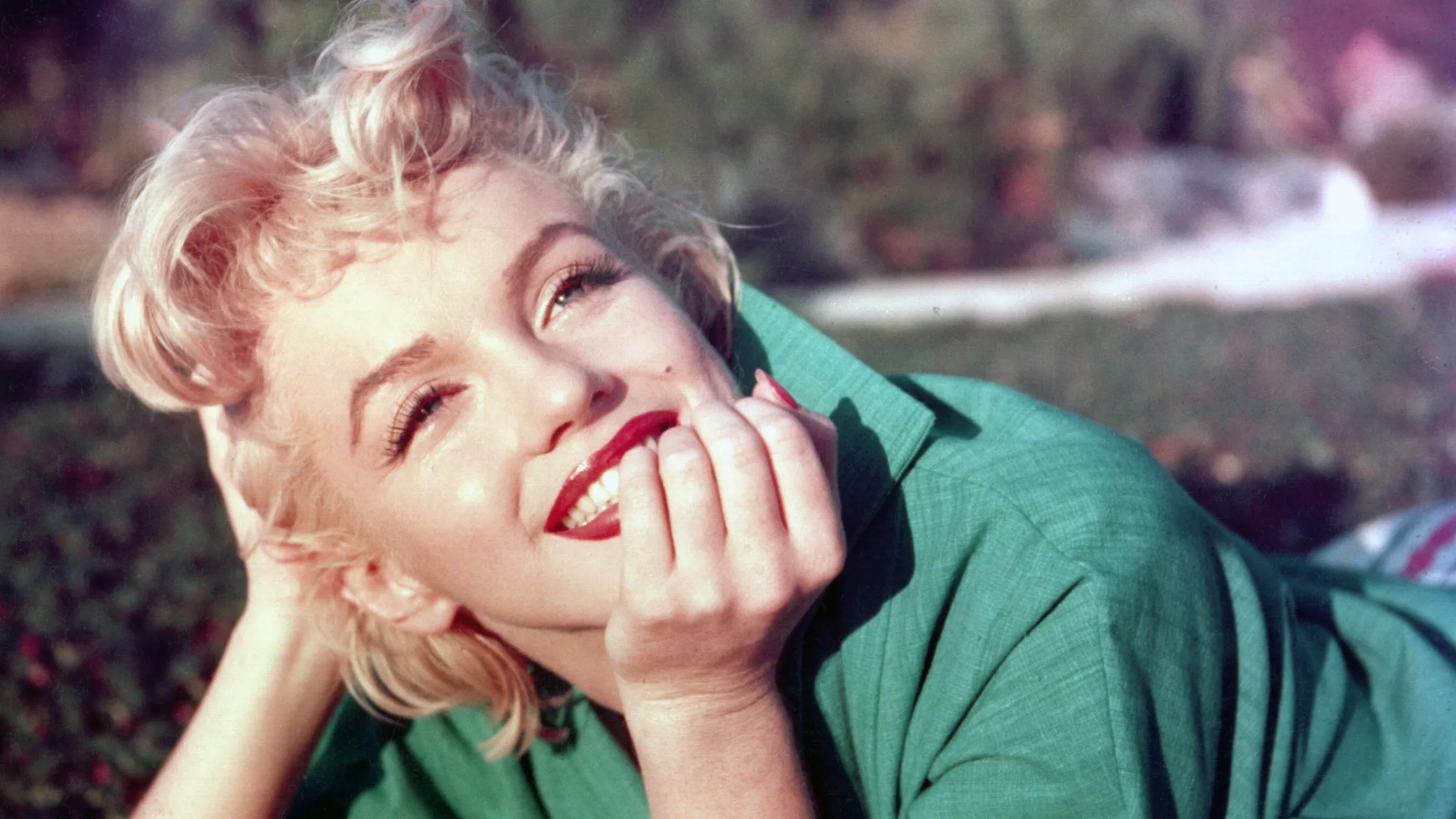
Marilyn Monroe. (Getty Images)
Understanding of gender identity and sexual orientation have evolved over time, as well as societal expectations regarding gender and sexuality.
Uncovering historical narratives of any queer identity can be challenging because the way people express themselves in light of those constructs does not always align with how LGBTQIA+ people talk about their experience today.
Asexual Possibility
“There were no thoughts of sex in my head. I didn’t want to be kissed, and I didn’t dream of being seduced by a duke or a movie star…I was unsensual as a fossil.”
Believe it or not, that is an excerpt from Marilyn Monroe’s unfinished, posthumously published autobiography, My Story.
Despite being a sex symbol in the media, Marilyn shared that she did not understand how or why that came to be. Though her difficulties with depression and self-worth are known, her reflections on sexual desire do not appear to be connected. On several occasions she also writes about her lack of interest in sex during with husbands and boyfriends, which was especially distressing as her public persona was so different from her personal experiences. Like many asexual people today, Marilyn wondered if something was wrong with her. She also thought her disinterest in sex with men might mean she was a lesbian. There is evidence she was attracted to women, but may have only had romantic , emotional fulfillment; physical desire was limited.
Embracing “Queer Possibility” extends to asexuality. As stated by LGBTQIA+ nonprofit media outlet Queer AF, “We will never know how Monroe really experienced her sexuality, nor should we give her – or anyone – a concrete label posthumously. But it’s definitely interesting to observe.” When discovering primary accounts like Marilyn’s, it is important to validate the account and contextualize it with other evidence to provide a nuanced view of her sexuality, rather than prescribing firm labels.
Just a few decades later, in his 2011 book, “Gunn’s Golden Rules,” fashion icon Tim Gunn explains growing up not understanding his identity. As a child growing up in the 1950s and 60s, Tim recognized that he did not have crushes on anyone the way that his peers did. “I didn’t know what I was,” he explains. “I knew what I wasn’t: I wasn’t interested in boys, but I really wasn’t interested in girls.”
During that period, being lesbian or gay was barely discussed, let alone being asexual. Access to language, information, and community was simply not there for a young Tim Gunn. However, given the period Tim lives in, that has changed as an adult. Further, as LGBTQIA+ identity has become more acceptable and he is a celebrity in the 21st Century, we have access to his first-hand, widely-published memoirs and recorded interviews. If Tim had lived in previous decades or centuries, like Marilyn, we likely would not have evidence of his asexual identity in the same way. Because of this, we should look to modern narratives of the asexual experience and seek common threads in the archives.
Suggested Reading
Elizabeth Hanna Hanson, “Making Something Out of Nothing: Asexuality and Narrative” dissertation, 2013, Loyola University Chicago
Yujia Zhu, “Invisible Desires: Uncovering Asexual Histories and the Erasure of Non-Sexual Identities in Historical Narratives,” 2025, Proceedings of The World Conference on Social Sciences
Michael Waters, “Finding Asexuality in the Archives,” 2020, Slate
Bibliography
Did you miss Part 1: Demystifying Asexuality?
Did that example spark some ideas for your museum or organization?
Let’s connect to make those ideas a reality! Book a Discovery Call today.